
PAYMENT EQUIPMENT
Payment Terminal or POS System: What Does Your Business Need?
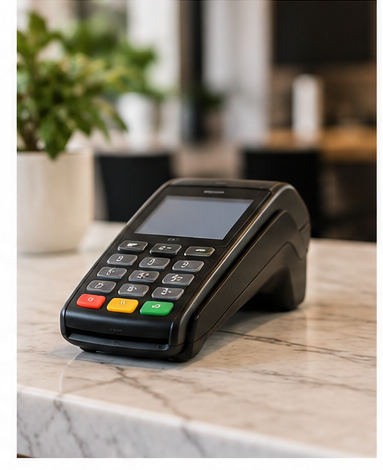
Start with how your team serves customers. Some businesses need a reliable way to accept cards. Others need payments connected with orders, inventory or a wider operating system.
THE TAKEAWAY
Choose equipment around your workflow, then confirm compatibility, ongoing costs and support.
When a terminal may fit
A payment terminal focuses on accepting payments. Depending on the model, it may support chip cards, contactless payments and receipts. A countertop setup may suit a fixed checkout, while a portable device may help when payment happens at a table or away from the counter.
When to consider a POS system
A point of sale system can connect payments with other business tasks, such as orders, inventory and reporting. Features vary by product and software plan. Some modern terminals include POS functions, so compare what a device actually does rather than relying on its label.
Check the fit before buying
- Test the payment methods your customers use.
- Confirm the required internet connection and any backup options.
- Ask whether it works with your processor and existing software.
- Compare purchase, rental, software and accessory costs.
- Find out how updates, replacement equipment and support are handled.
Include security in the conversation
Ask your provider which security responsibilities remain with your business. The PCI Security Standards Council maintains listings for approved payment devices and validated solutions. Check the exact product and configuration with your provider; a device alone does not resolve every security obligation.
Before committing, ask for a demonstration of the tasks your staff will perform most often, including refunds and end of day reporting.
Further reading: PCI Security Standards Council technology resources and Square’s guide to choosing a terminal.